Spring Allergies? Your HVAC Might Be the Problem, or the Solution
How Durham Region Homeowners Can Use Their Home Comfort System to Breathe Easier This Spring
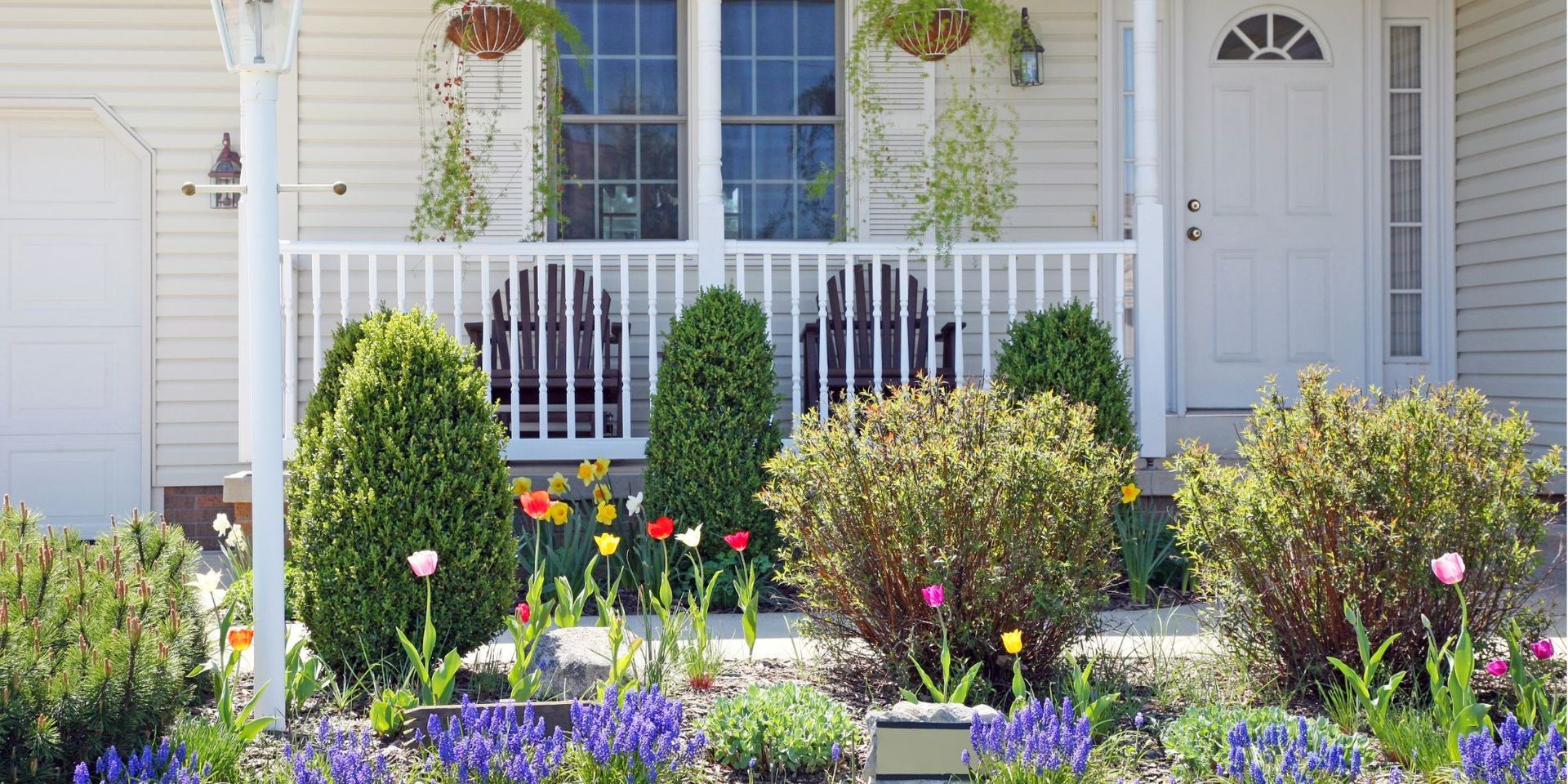
Your HVAC system can either trap and remove airborne allergens or spread them throughout your home — the difference comes down to maintenance and the right equipment. Upgrading to a MERV 11+ filter, cleaning your ERV/HRV, and maintaining proper indoor humidity are the three most impactful steps Durham Region homeowners can take before pollen season peaks.
Spring in Pickering and Durham Region is a beautiful thing — until the sneezing starts.
Tree pollen from oak, birch, and maple typically begins filling the air across Ontario from late March through May, with grass pollen following close behind into June. Late spring to early summer is often the most challenging period for allergy sufferers, as tree and grass pollens frequently coincide — and pollen counts can reach their yearly peak on dry, warm, and windy days.
What many homeowners don't realize is that while they're opening windows to enjoy the fresh air, they're also inviting those allergens straight into their living space — and their HVAC system can either help or hurt, depending on its condition.
Here's what you need to know.

Why Indoor Air Can Be Worse Than Outdoor Air
It seems counterintuitive, but the air inside your home during allergy season can contain higher concentrations of allergens than the air outside.
Common allergens such as pollen, dust mites, mold spores, pet dander, and volatile organic compounds (VOCs) circulate through the indoor environment, especially during spring months when outdoor air pollution also tends to peak.
Once pollen enters your home — through open windows, doors, clothing, and pets — it doesn't just disappear. It settles into carpets, soft furniture, and your ductwork. Every time your HVAC system runs, it circulates that air throughout every room in the house. A well-maintained system with the right filter will trap those particles. A poorly maintained one will just keep moving them around.
The Most Important Thing You Can Do: Upgrade Your Filter
Your furnace filter is your home's first line of defence against airborne allergens — and most standard filters aren't doing enough.
Filters are rated on the MERV scale (Minimum Efficiency Reporting Value). Here's what the numbers mean for Durham Region allergy sufferers:
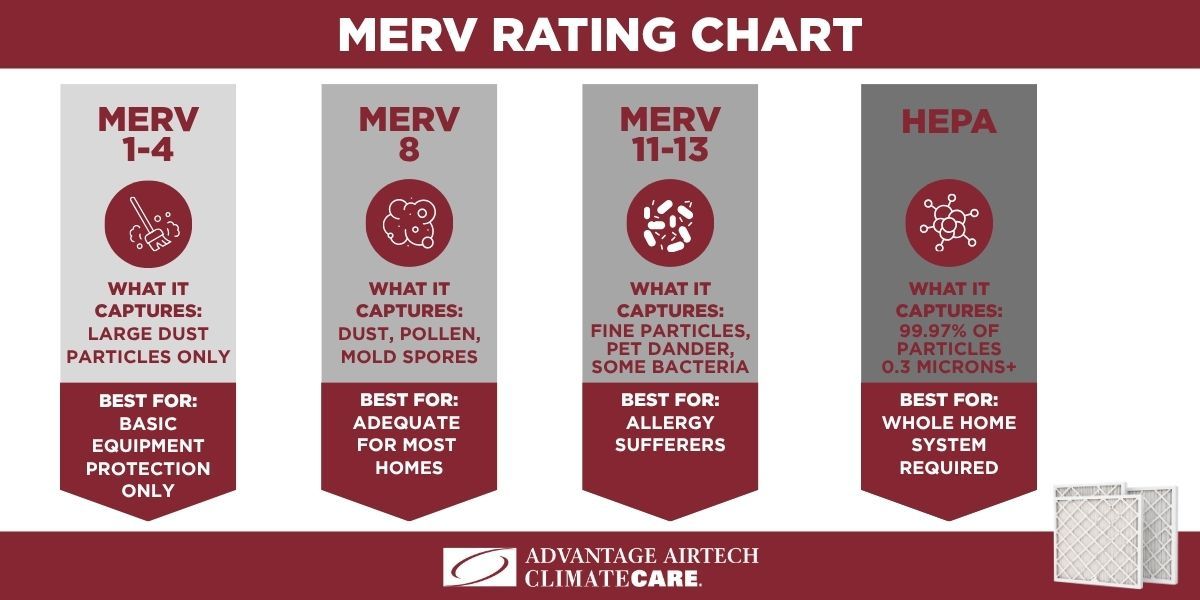
Replacing your standard filter with one rated MERV 11 or higher can help trap finer particles and provide meaningful relief for allergy and asthma sufferers.
Important note: Do not simply install a HEPA filter into a standard residential furnace. The increased air resistance can damage your blower motor. A HEPA filter can be retrofitted to work with a ducted HVAC system, but must be done properly — attempting to add one to a standard system without modifications may cause furnace or air conditioning failure. Ask your HVAC technician about the right high-efficiency filter for your specific system.
How often to change your filter during allergy season:
- Standard 1" filters: check monthly, replace every 30–60 days during peak pollen season
- 5" pleated media filters: generally once per year, but check in spring
Don't Forget Your ERV or HRV
Many Durham Region homes built in the last 20 years have an Energy Recovery Ventilator (ERV) or Heat Recovery Ventilator (HRV) — a system that exchanges stale indoor air with fresh outdoor air.
This is great for air quality year-round, but in spring it creates a direct pathway for pollen to enter your home. If your ERV/HRV filters are dirty or clogged, pollen passes through them freely and gets distributed through your ductwork.
Spring ERV/HRV maintenance checklist:
- Clean or replace the exterior intake and exhaust screens
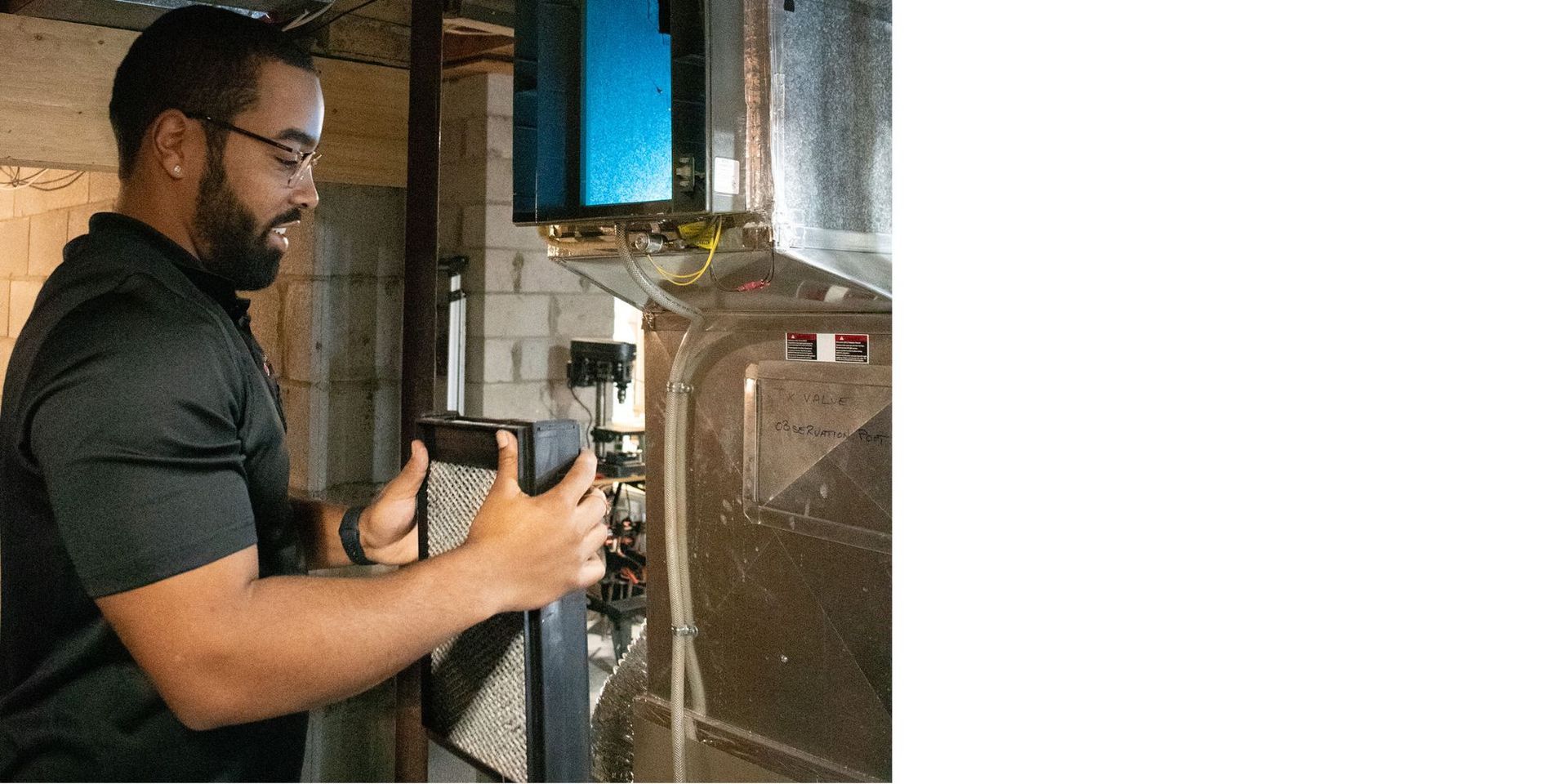
- Remove and wash the internal filters (most are washable with water)
- Clean the internal core with mild disinfectant — moisture buildup in the core can harbour mold
- Check the drainage tubing for blockages
A properly maintained ERV/HRV gives you the benefit of fresh air without the full allergy burden. A neglected one makes your allergy symptoms worse.
Control Your Indoor Humidity
Humidity levels directly affect the prevalence of allergens in your home. Dust mites and mold — two of the most common indoor allergy triggers — thrive in humid environments. Maintaining indoor relative humidity between 30–50% can help reduce these allergens significantly.
This matters especially in spring, as Durham Region transitions from the dry winter air to the more humid spring and summer months. As outdoor humidity rises, homeowners who leave their whole-home humidifier running at winter settings risk pushing indoor humidity too high — creating ideal conditions for mold and dust mite growth.
What to do in spring:
- Turn down or shut off your whole-home humidifier as outdoor temperatures rise
- Monitor your indoor humidity using your thermostat's hygrometer or a standalone monitor
- If you're seeing condensation on windows, your humidity is too high
- If indoor humidity stays consistently above 50%, consider a whole-home dehumidifier for summer

Keep Windows Closed on High Pollen Days
This is the simplest tip — and one of the most effective. On high-pollen days, keeping windows and doors closed and relying on your HVAC system to circulate air will help keep pollutants out and reduce indoor allergens.
Check the daily pollen forecast on Weather Network or the Aerobiology Research Laboratories pollen tracker before deciding whether to open windows. Tree pollen counts in Ontario are typically highest on dry, warm, windy days — and lowest on rainy days and in the early morning.
Upgrade Options for Serious Allergy Sufferers
If standard filter upgrades aren't providing enough relief, there are whole-home solutions that work with your existing HVAC system:
Whole-Home Air Purifiers These install directly into your ductwork and clean air as it circulates through the system — treating every room in the house, not just one. Many models use advanced filtration technology, UV light, or both to neutralize pollen, mold spores, bacteria, and VOCs.
UV Light Systems Ultraviolet germicidal irradiation (UVGI) systems install inside your air handler and use UV-C light to neutralize biological contaminants — including mold spores, bacteria, and some viruses — as air passes through.
Whole-Home Dehumidifiers For homes with persistently high humidity in summer, a whole-home dehumidifier integrated with your HVAC system maintains optimal indoor humidity automatically — without the maintenance hassle of portable units.
FAQ: HVAC and Spring Allergies in Durham Region
Q: Can my HVAC system make my allergies worse? Yes. A dirty filter, clogged ductwork, or poorly maintained ERV/HRV can circulate allergens throughout your home rather than removing them. Regular maintenance is essential before allergy season.
Q: What MERV rating filter should I use if I have allergies? MERV 11–13 is the recommended range for allergy sufferers using a standard residential HVAC system. Always confirm the right filter for your specific system with your HVAC technician.
Q: When does tree pollen season start in Pickering, Ontario? Tree pollen season in Durham Region typically begins in late March and runs through late May. Oak, maple, and birch are the primary culprits. Grass pollen follows from late May into July.
Q: Do whole-home air purifiers really work? Yes — whole-home purifiers that install into your ductwork are significantly more effective than portable room units because they treat all the air circulating through your home. Look for systems with MERV 13+ filtration or UV-C capability.
The Bottom Line
Your HVAC system is one of the most powerful tools you have against spring allergies — if it's properly maintained and equipped. Start with a filter upgrade, clean your ERV/HRV, and dial back the humidifier as spring arrives. If symptoms remain severe, a whole-home air purifier is worth a conversation with your HVAC technician.
You might also like